
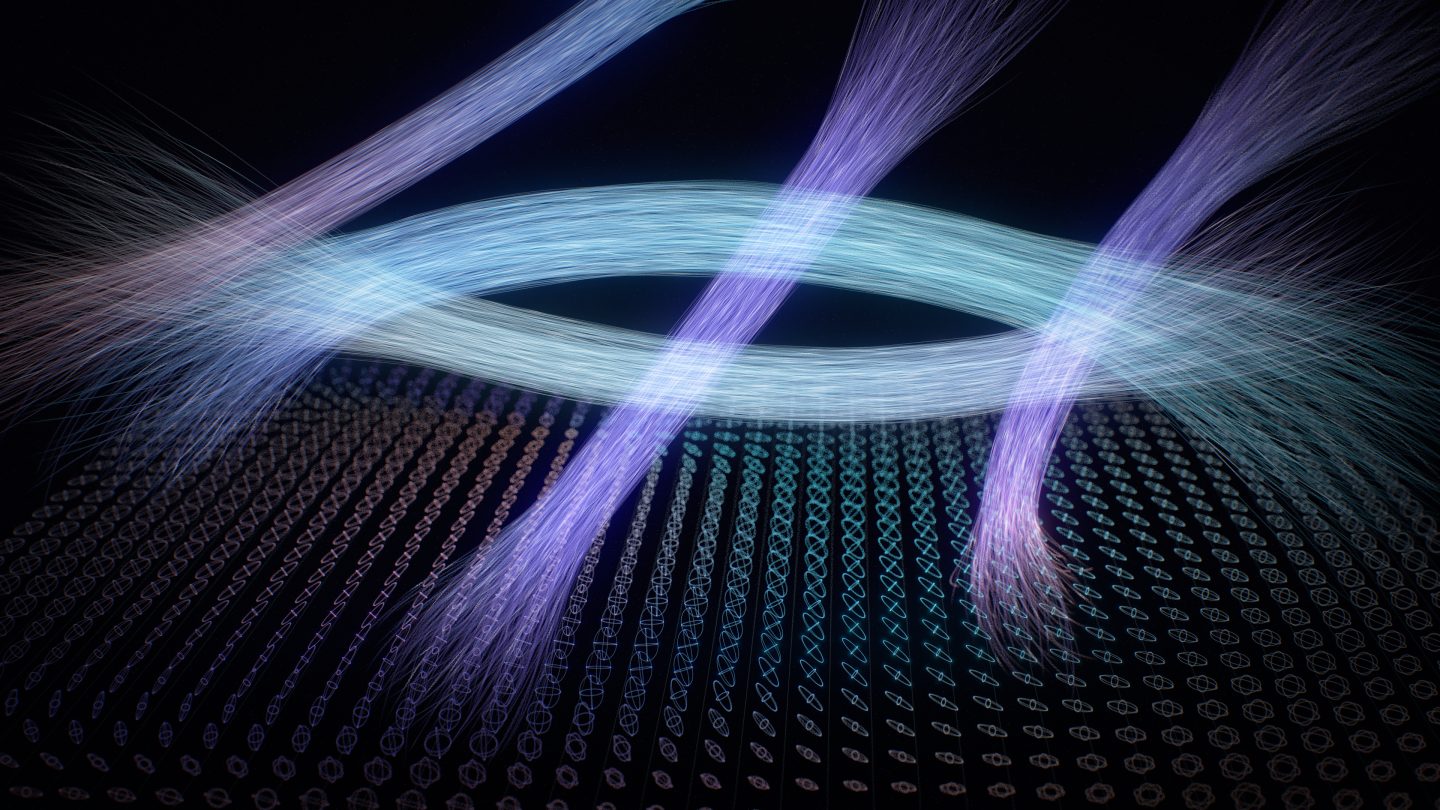
For several years, my work ended up in an operating room. I prepared pre-surgical plans based on diffusion MRI: reconstructions of the fibre bundles that serve language, movement and reading, so that a neurosurgeon could plan how to reach and remove a tumour while preserving them. Today I work on computer vision for industrial inspection. The two worlds look very different. The lessons travel surprisingly well.
A visualisation is a claim
Tractography produces beautiful images: colourful bundles of fibres that seem to reveal the brain's wiring. But each of those lines is the output of a model, with assumptions, parameters and known failure modes. Draw a bundle in the wrong place and a surgeon may take the wrong decision with full confidence.
Industrial AI carries the same risk. A clean heat map or a confident score is a claim about reality, not reality itself. The engineer's responsibility is to know — and to communicate — how far that claim can be trusted.
Multidisciplinary is not a buzzword
In neurosurgery, a plan is the work of a team: neuroradiologists, neurosurgeons, neurophysiologists, engineers. Each sees something the others cannot. Planning only worked when we built a shared language around the images, and when every specialist could challenge the others' assumptions.
Industrial projects are no different. Process engineers know the product, automation engineers know the machine, operators know the line at three in the morning, data scientists know the models. A vision system that ignores any of these perspectives will fail precisely in that blind spot.
Validate against the outcome that matters
In the hospital, the outcome that matters is not the elegance of a reconstruction: it is what happens to the patient. We compared pre-operative tractography with intra-operative monitoring and post-operative imaging, because the only honest validation is against the real outcome.
In industry, the equivalent is to measure what the customer actually cares about — escapes, false rejects, throughput, traceability — under real operating conditions, and to keep measuring after deployment.
Precision is a habit
When the consequences are real, you learn to slow down where it matters: double-checking data, documenting assumptions, saying “I'm not sure” when you are not. That habit is not specific to medicine. It is what makes engineering trustworthy anywhere.
Moving from research to industry did not mean leaving science behind. It meant applying the same method to a different kind of problem — one where the cost of a mistake is measured in trust as well as in money.